
Imagine a board meeting. The CMO is presenting, the CIO is taking notes, and the CEO asks a single question:
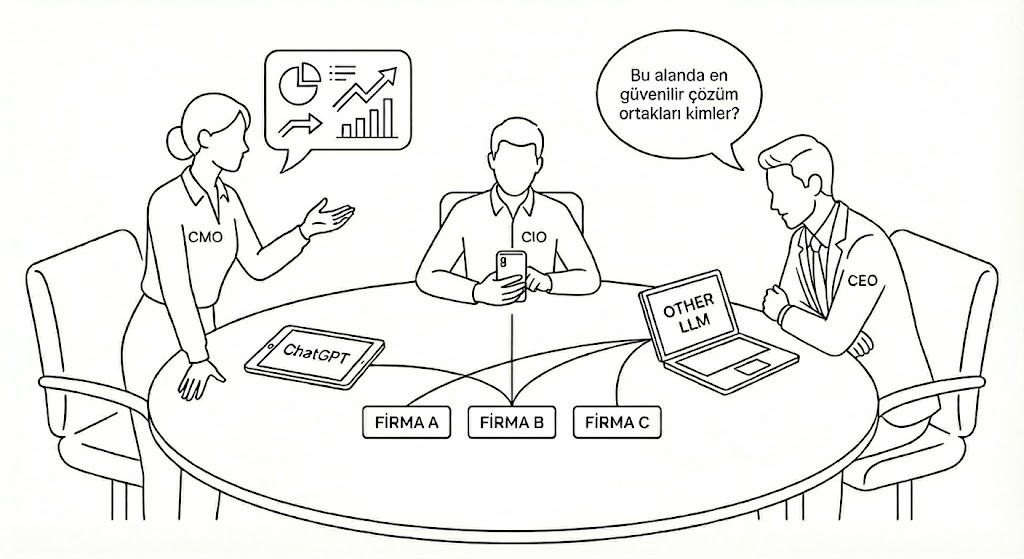
“Who are the most reliable solution partners in this space?”
No one opens Google. No one looks at an ad. One person asks ChatGPT, another asks a different LLM. Within seconds, three or four brand names land in the middle of the table.
This is exactly where GEO begins.
What GEO Is — and Is Not
GEO (Generative Engine Optimization) is often described as a new version of SEO. In reality, the key difference is this:
- SEO asks: “Am I on the list?”
- GEO asks: “Am I being recommended in the answer?”
It’s not about the ranking in a results page but about having a place in the model’s mental map. The difference between merely being mentioned and being recommended first can redirect multi‑million‑dollar budgets in enterprise projects.
Example: Software Agencies in Istanbul
Imagine two firms: AlphaTech and BetaSoft. Both are based in Istanbul, each has a 100+ person team, and both use similar technologies. But their content strategies are different.
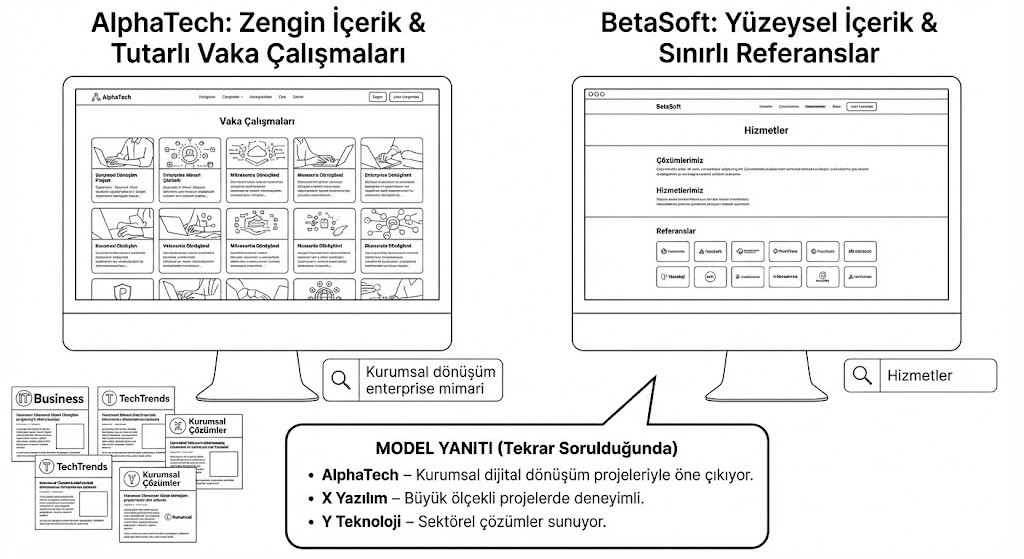
Suppose a holding company is looking for a software agency in Istanbul for a digital transformation project. The prompt might be:
“Can you recommend enterprise‑grade software development agencies in Istanbul?”
The model typically returns a short list of 3–4 firms. Why those, and not the dozens of others?
The reason is not technical, but content‑driven:
- Deep, specific case studies,
- Consistent use of concepts like “digital transformation” and “enterprise architecture”,
- Repeated context in sector publications and news.
These signals accumulate and push the model to treat a handful of agencies as “the natural answers to this question.”
At this point, this is not about ads.
GEO as a Mental Map, Not a Ranking
Instead of “What position am I in?”, GEO focuses on questions like:
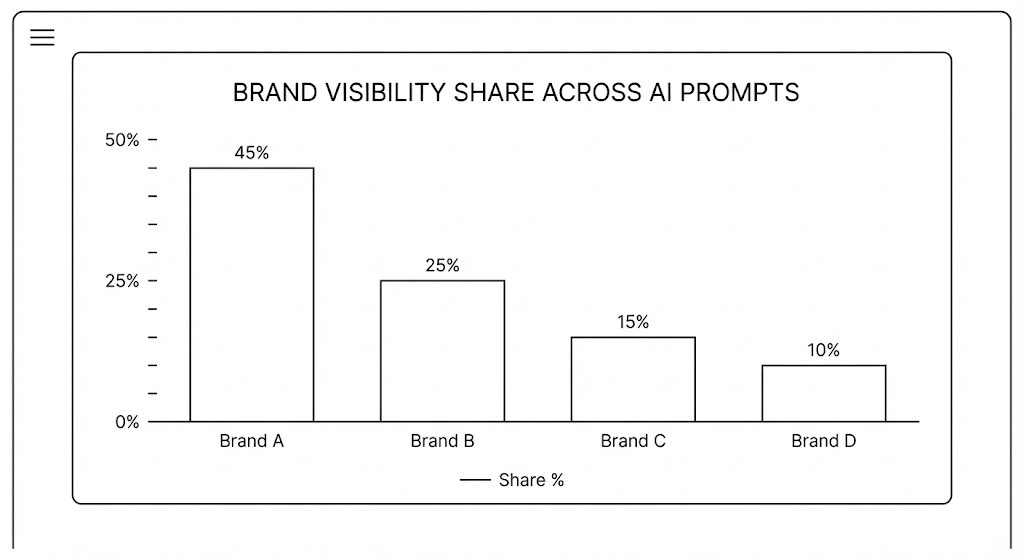
- In which prompt categories am I recommended?
- Which competitors appear in the same answer with me?
- How am I framed in the answer? (expert, boutique, global, innovative…)
That’s why GEO is not just a content tactic, but a strategic positioning discipline. The goal is to systematically become the brand that gets named at the moment of decision.
The Fetchme Perspective
Platforms like fetchme make GEO concrete and measurable by answering:
- Which prompt categories are strategically important for enterprise brands?
- In which contexts are competitors stronger?
- Is our visibility trend going up or down?
Ultimately, success is not just about being visible, but about being remembered in the right context. Generative models have become filters that shape decisions, and GEO is the framework for building a durable place inside those filters.